Showing posts with label education. Show all posts

Wednesday, June 18, 2008

Back with a Vengeance

Summer is upon us (and by us, I mean me), which means slightly more time for this little adventure I like to call NeoCorTEXT.

As previously blogged about, I have begun reading Who Is Man? by Abraham Joshua Heschel. I highly recommend it. It is a short work that is a collection of his talks given at the Raymond Fred West Memorial Lectures at Stanford University in 1963.

Here are some quotations from Part I that resonate with me:

"The animality of man we can grasp with a fair degree of clarity. The perplexity begins when we attempt to make clear what is meant by the humanity of man."

"He knows that something is meant by what he is, by what he does, but he remains perplexed when called upon to interpret his own being."

"Man was, is, and will always remain a beast, and nothing beastly is alien to him. And yet such an epigram, though rationally plausible, is intuitively repulsive."

Here is where it has direct applications to what I see as my future research:

"...man has become man by acts of culture, by changing his natural state."

"One's relationship to the self is inconceivable without the possession of certain standards or preferences of value."

"...the problem of man is occasioned by our coming upon a conflict or contradiction between existence and expectation.

and finally: "How shall we articulate exactly what is sensed by us vaguely?"

Now this was only Part I - the introduction to the lectures - where Heschel introduces all the problems and questions. Because it's Heschel, God will enter into the solution somewhere, but it isn't clear yet how or in what way.
However, I believe that neuroscientists today are asking the same questions that Heschel asked nearly fifty years ago: "How shall we articulate exactly what is sensed by us vaguely?" People have a sense that they are somehow different from other animals. Many would say that culture is a key difference. I would say (and this echoes Heschel) that what sets humans apart - what makes humans human - is the ability to assign value to behavior. We don't merely engage in self-observation, we engage in self-judgement. Animals can perceive their position in physical space; humans can perceive their position in "moral space." The question I'd like to ask is: how does the brain engage in this sort of moral perception? How does the human brain make moral decisions? How do we teach morals to our children, and how did we learn them from our parents and teachers?

My motivation here may at first seem confusing: I am (currently) doing research on reading. I'm asking questions about how reading skill is built up in the brain, and how the environment contributes to it. This is analogous: How is moral decision-making skill built up in the brain? How does the environment (e.g. culture, education) contribute to our development of values? There must be similar underlying processes at the biological level. Many schools and camps and whatnot say that they provide a "values education." I'd like to prove it.

Wednesday, March 26, 2008

Quotation Stealing

PZ Myers at Pharyngula stole this quote from Mike the Mad Scientist, and I am stealing it from PZ here:

Mike the Mad Biologist wins a gold star for this quote that I'll be stealing:

The other thing we evolutionary biologists don't do enough of, and this stems from the previous point, is make an emotional and moral case for the study of evolution. Last night, I concluded my talk with a quote from Dover, PA creationist school board member William Cunningham, who declared, "Two thousand years ago someone died on a cross. Can't someone take a stand for him?"

My response was, "In the last two minutes, someone died from a bacterial infection. We take a stand for him."

Now that is good framing.

Tuesday, February 12, 2008

Developmental Dyscalculia: A Brain-Based Etiology

Neurological Evidence for a Brain-Based Etiology of Dyscalculia

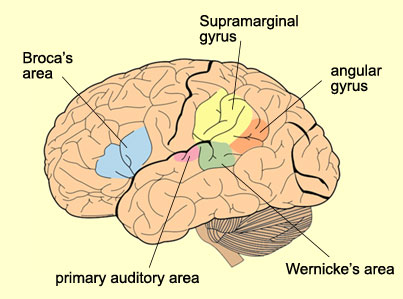
Anecdotal case-studies of patients with various brain lesions have demonstrated the dissociation of different calculation elements, thereby supporting the assumption that numerical ability represents a multifactor skill, requiring the participation of different abilities and quite diverse brain areas (Ardilla and Rosselli, 2002). These case studies have also allowed for the subtyping of dyscalculia and acalculia. Mathematical and arithmetic abilities can be impaired as a result of language, spatial, or executive functions. Ardilla and Rosselli (2002) detail some of the subtypes and associated ROIs (some of which are labeled on the diagram below):


Anarithmetia could be interpreted as a defect in understanding how the numerical system works, and is associated with damage to the left angular gyrus. Damage to the left angular gyrus is also associated with Gerstmann’s syndrome, which combines dyscalculia with finger agnosia (and results in an inability to count on one’s fingers), as well as dysgraphia and right-left disorientation. When electrical stimulation is applied to the angular gyrus in otherwise normal individuals, they present with signs of Gerstmann’s syndrome.

Patients with acalculia in Broca’s aphasia present with errors in the syntax of calculation. That is, they present “stack errors” (e.g. 14 is read as 4). While counting forward is not affected, counting backward relies more on verbal sequencing, and is impaired. Errors in transcoding numbers from verbal code to numerical code are present (e.g. “three hundred and seven” to 307), as are hierarchical errors (e.g. patients do not understand the difference between the two times the word “hundred” appears in “three hundred thousand, two hundred”). As this is associated with Broca’s aphasia, it is associated with the left inferior frontal gyrus.

Patients with acalculia in Wernicke’s aphasia present semantic and lexical errors in saying, reading, and writing numbers. However, simple mental arithmetic operations are errorless. Like in Broca’s aphasia, most of the errors that present in this case are language related. As these symptoms are associated with Wernicke’s aphasia, the left posterior superior temporal gyrus is implicated.

Patients with spatial acalculia have no difficulties in counting or in performing successive operations. However, some fragmentation appears in reading numbers (e.g. 523 becomes 23), resulting from left hemi-spatial neglect. Reading complex numbers is also prone to errors, as the spatial position of each digit relative to the other digits becomes important: 1003 becomes 103, 32 becomes 23, or 734 becomes 43. When writing, patients cannot line up numbers in columns, creating difficulty in arithmetic calculation. Moreover, digit iterations are frequent (e.g. 27 becomes 22277), as are feature iterations (e.g. 3 is written with extra loops). The patient has a full understanding of “carrying over” in subtraction, but cannot find the proper location to write the number.

Patients with frontal (executive function) acalculia have damage in the pre-frontal cortex. These patients typically present with serious difficulties in mental arithmetic operations, successive operations (particularly subtraction), and solving multi-step numerical problems. They generally also have serious disturbances in applying mathematical knowledge to time (e.g. they could not tell you if America was founded closer to 10 years ago or to 200 years ago). When aided by pencil and paper, however, most of these patients are errorless.

As the quality and quantity of different types of non-invasive neuroimaging methods has increased, researchers have been able to examine different regions of interest throughout the brain to discover how they are involved in mathematics and arithmetic, and how they can be implicated in developmental dyscalculia. Dehaene et al. (2004) carried out a series of fMRI investigations, in a study called Arithmetic and the Brain. They found a set of parietal, prefrontal, and cingulate areas which were reliably activated by patients undergoing mental calculation. The precentral sulcus is often co-activated with the inferior frontal gyrus. They’ve also considered the role of the left and right fusiform gyri and occipito-temporal regions in recognizing visual number forms.

Dehaene (2004) has implicated the angular gyrus in mathematics and arithmetic. The angular gyrus has been activated by digit naming tasks as well as mental multiplication. This was demonstrated by a study in which a normal patient’s angular gyrus was electrically stimulated, which disrupted multiplication. In addition, metabolic abnormalities have been found in the angular gyrus in individuals with dyscalculia: a focal defect in a left temporo-parietal brain region near the angular gyrus was isolated, with differential decreases in N-acetyl-aspartate, creatine, and choline (Levy, Reis, and Grafman, 1999).

A region of interest that has received lots of attention in dyscalculia research is the horizontal segment of the intraparietal sulcus (HIPS), in both hemispheres. Activation of the right and left HIPS has been seen during basic calculation tasks as well as digit detection tasks. Further, is it multi-modal, responding equally to spoken words and written words, as well as Arabic numerals. Right HIPS activation has also been seen in tasks where subjects estimate the numerosity of a set of concrete visual objects. Electrical stimulation of an anterior left HIPS site disrupted subtraction. Isaacs et al. (2001) found a left IPS reduction in grey matter in children with developmental dyscalculia at the precise coordinates where activation is observed in normal children during arithmetic tasks.

Molko et al. (2003) studied individuals with Turner Syndrome, a genetic X-linked condition which is associated with abnormal development of numerical representation. In the right IPS, a decrease in maximal depth as well as a trend toward reduced length was observed for subjects with Turner Syndrome when compared with control subjects. Additionally, the center of gravity of the central sulcus showed a significant posterior displacement in Turner Syndrome patients.

Despite the relative inter-subject irregularity of cortical geometry, there are general consistencies found in normal individuals. For example, the anterior-posterior orientation of the IPS, its downward convexity, as well as its segmentation into three parts, was observed in all controls. In contrast, the right intraparietal sulcal pattern of most subjects with Turner Syndrome did not conform to those patterns due to aberrant branches, abnormal interruption, or unusual orientation. For example, the three segments were only observed in 7 of 14 Turner Syndrome subjects, while the downward convexity was only seen in 3 of 14.

In agreement with the fMRI findings of Dehaene et al. (2004), during exact and approximate calculation tasks, Molko et al. (2003) found reduced activation in the right IPS as a function of number size. Similar fMRI hypoactivations were found in a broader parieto-prefrontal network in two other genetic conditions associated with developmental dyscalculia: fragile X syndrome and velocardiofacial syndrome (Dehaene et al., 2004).

In a meta-analysis of fMRI studies of arithmetic and numbers, Dehaene offer a tripartite organization for number processing in the brain:
The horizontal segment of the intraparietal sulcus (HIPS) appears as a plausible candidate for domain specificity: It is systematically activated whenever numbers are manipulated, independently of number notation, and with increasing activation as the task puts greater emphasis on quantity processing. Depending on task demands, we speculate that this core quantity system, analogous to an internal “number line,” can be supplemented by two other circuits. A left angular gyrus area, in connection with other left-hemispheric perisylvian areas, supports the manipulation of numbers in verbal form. Finally, a bilateral posterior superior parietal system supports attentional orientation on the mental number line, just like on any other spatial dimension. (Dehaene, Piazza, Pinel, and Cohen, 2003, p.1)

Sunday, February 10, 2008

Developmental Dyscalculia, Part Next

Continuing on in the series about a fascinating (I think) developmental learning disorder that not many people know about.
--------------------------------------------------------------------------------------------------------------------

Cognitive Domains: Attention

Also associated with information processing theory is inhibition, which is the active suppression of irrelevant sensory input. Related to this is the idea of resistance to interference, or attention, which is the ability of an individual to concentrate on “central” information and ignore “peripheral” information. Normally-achieving students can complete an arithmetic worksheet in a noisy classroom with minimal distraction, and accuracy is usually very high. Students with developmental dyscalculia, however, may have issues with processing due to a deficit in inhibition.

Rosenberger (1989) offers evidence that low achievement in math is related to attentional deficits. He sampled 102 children for his study, and ran them on a series of paper-and-pencil tests and questionnaires; those children for whom the math achievement quotient was below 100, the reading achievement quotient above 100, and the difference between the two was at least 20 points (approximately 1.5 SDs) or greater were designated “dyscalculic.” Children who met the converse criteria were designated “dyslexic.” 72 children qualified as dyscalculic, and 30 qualified as dyslexic. Both groups were neurologically intact, and without history of epileptic seizures or structural central nervous system disease. The groups were highly comparable in overall scholastic aptitude as well; in fact, only the arithmetic score pre-experimentally distinguished the two groups.

Rosenberger found that the “freedom from distractibility” quotient from the Weschler scale was lower for the dyscalculics, although this is confounded with the score of the arithmetic subtest. Of four factors calculated from the DSM-III questionnaire that each participant received, only the factor of inattention was significantly different for the groups, and was higher for dyscalculics. Rosenberger offers that specific math underachievement is, in at least some cases, the result of failure of children with attention deficits to automatize number facts in the early grades. If true, “this finding would suggest that [attention deficit] is not merely an additive or aggravating factor in problems with math performance, but in fact interferes with the development of aptitude for this skill” (Rosenberger, 1989, p. 219).


Cited:
Rosenberger, P.B. (1989). Perceptual-motor and attentional correlates of developmental dyscalculia. Annals of Neurology, 26, 216-220.

Wednesday, February 6, 2008

Developmental Dyscalculia, Part 4

Part 4 in the series:
----------------------------
Cognitive Domains: Memory

At the end of a child’s exploration of various strategies available, the mastery of elementary arithmetic is achieved when all basic facts can be retrieved from long-term memory without error. Mastery of basic arithmetic is crucial to later competence in more complex mathematical operations such as long division, fractions, geometry, calculus, and so on. Given the importance of memory to basic arithmetic competence, even if a child has successfully reached the most efficient strategy, deficits in memory could lead to mathematics disabilities.

When a computation is executed, the probability of direct retrieval increases for each subsequent solution to the same problem. However, in order for the execution of a computational strategy to lead to the construction of a long-term memory representation between a problem and its solution, both the equation’s augend (i.e. the first number) and addend (i.e. the second number), as well as the answer, must all be simultaneously active in working memory. Thus, arithmetic and mathematical ability is directly related to the function (or dysfunction) of the working and long-term memory stores (Geary, 1993).

In order to create a long-term memory for an arithmetic fact, such as 13 + 7 = 20, an individual must be both proficient (i.e. accurate) and efficient (i.e. speedy). Accuracy is important because if the child commits many computational errors, then the child is more likely to retrieve incorrect answers from long-term memory when later presented with the same problem. Efficiency is likewise important because with a slow counting speed, the working memory representation of the augend is more likely to decay before the addend and solution have been fully represented in working memory. In this circumstance, even if the child reaches the correct answer, it will be less strongly associated with the problem in long-term memory.

These cognitive models are evidenced empirically, as indicated by Geary (1993): “Cognitive studies indicate that when solving arithmetic problems, in relation to their normal peers, [mathematically disabled] children tend to use immature problem-solving strategies, have rather long solution times, and frequently commit computational and memory-retrieval errors.”

Butterworth (2005) further refines the role of working and long-term memory in the storage of arithmetic facts. He presents evidence that retrieval times show a very strong problem-size effect for single-digit problems: the larger the sum or product, the longer it takes to solve. Further, adults without any mathematical disability are quicker to solve an equation in the form of “larger addend” + “smaller addend” than they are to solve the same equation where the addends are reversed. Similarly, normal Italian children 6-10 years old took longer to solve a “smaller” x “larger” equation than a “larger” x “smaller” equation, despite the fact that the Italian education system teaches “smaller” x “larger” first (e.g. the 2x multiplication table is learned before the 6x multiplication table). This seems contradictory to the earlier theory, which offers that equations with which you have more experiences are more strongly stored in long-term memory – since the 2x arithmetic facts were presumably encoded into long-term memory well before the 6x arithmetic facts. This evidence suggests a more complex numerical organization to the storage and representation of arithmetic facts in long-term memory, not just rote association.

Information processing theory offers yet another model for the role that the function or dysfunction of working and long-term memory has in the pathology of developmental dyscalculia and other mathematical impairments. Central to information processing theory is the idea of limited capacity: the human mind has only a finite capacity for information processing at any one time. A fundamental assumption to this theory is that each type of mental process takes up some amount of the “space” or “energy”. At one extreme are automatic processes, which require virtually no space or energy. These processes work without intention or conscious awareness, don’t interfere with other processes, don’t improve with practice, and are not influenced by intelligence, education, motivation, or anything else, such as breathing or sweating. On the other end of the continuum are effortful processes, which use up the resources available in working memory, and have the opposite properties of automatic processes.

When confronted with an arithmetic task, a normal student can complete the task with minimal problems and fairly efficiently – even if the solution isn’t accessed via fact retrieval. For a student with math disabilities, however, the process is likely laborious and takes up significant amounts of energy. Perhaps this has something to do with the continuum of automatic and effortful processing. When a normally-achieving student is confronted with a straightforward arithmetic problem such as 5 + 11 + 37, the student can quickly identify the steps needed to solve the equation and move on to the next item on the worksheet. When a mathematically disabled student is confronted with the same problem, even after having learned and understood the fundamentals of counting and addition, each of the steps necessary to compute the answer takes up significantly more effort to complete. By the time the student moves on to the next item, he has already expended considerably more energy than the first student has, and has likely taken more time to complete each problem. After the first three or four equations, his energy store is perhaps depleted, and the rest of the worksheet is riddled with errors because the student has no mental energy left to tackle the subsequent calculations.

Tuesday, January 29, 2008

Developmental Dyscalculia, Part 3

Cognitive Domains: Strategy

Experimental studies of developmental dyscalculia and math disability in children have focused primarily on skill development in arithmetic, which can be divided into two sections: counting knowledge, and strategy and memory development.

Counting is governed by five principles (Gallistel and Gelman, 1992):
(1) the one-to-one correspondence rule, where one word is assigned to each counted object;
(2) the stable order rule, where the order of counting words must be stable across sets of counted objects;
(3) the cardinality rule, which states that final counting word assigned represents the total number of objects in a set;
(4) the abstraction rule, which states that objects of any kind can be counted; and
(5) the order irrelevance rule, which states that items in a set can be counted in any order.

A mastery of counting is essential to discover the most efficient strategies for basic arithmetic procedures such as addition and subtraction, and later, multiplication and division.

In many models of cognitive development, children are depicted as thinking or acting a certain way for an extended period of time. Then, they undergo a brief and sometimes mysterious transition and begin to act and think in a new way. When considering cognitive development, Siegler (1994) prefers to understand change as variable and gradual, with different strategies available to a child as the child’s brain matures. Further, there are some problems where there is really only one logical strategy. After some time experimenting with different strategies, both in progressive and regressive directions, most children will focus on the best, most logical strategy, and lock onto it for much of the remainder of their lives.

Young children’s brains are highly active, with synaptogenesis peaking by age six or so. Following the periods of synaptogenesis there is widespread synaptic pruning, to make the synaptic pathways more efficient and speedy. So it is during this time of great neural change when students are first learning basic mathematics and reading skills. Given the proliferation of neural pathways, it makes sense that the normally developing child will use a variety of different strategies when faced with the same or similar problems. For example, there are at least three common strategies that children can use for addition. The most efficient is direct fact retrieval: 3 + 3 always equals 6. Another is the min strategy, where kids count up from the larger number: 9 +2 = (9 + 1) + 1 = 10 + 1 = 11. A third is decomposition into easily manipulated numbers: 19 + 22 = 19 + 20 + 2 = 39 + 2 = 41. Normally developing children will ultimately lock into one of these or another strategy when faced with a random addition problem.

Siegler’s model provides for two possible explanations for developmental dyscalculia. First, perhaps while the brain is undergoing its normal course of synaptogenesis and synaptic pruning, the child has not had enough experience with the various strategies for arithmetic – so by the time synaptic pruning occurs, it is unclear which neural pathways are stronger or more efficient. That leaves the child unable to become “expert” at any particular arithmetic task, as there is no clear efficient pathway left. Second, perhaps the child has had sufficient opportunity to experiment with the various strategies, but the synaptic pruning processes occur in a somewhat haphazard, non-systematic way, which leaves the child forever locked into a pattern of experimentation and variability. That is, the child does not have the opportunity to lock in on a best-choice strategy because of neural/biological limitations.

While neither of these possibilities precludes the children from gaining efficiency over a long period of time, they leave them behind the rest of their peers, significantly slowed down by the wide variety of problem-solving strategies available to them. These are particularly suitable explanations, given the empirical evidence that children with developmental dyscalculia are generally two grade levels below their peers in arithmetic and mathematics (Shalev, Auerbach, Manor, and Gross-Tsur, 2000).

References:
1. Gallistel, C.R., & Gelman, R. (1992). Preverbal and verbal counting and computation. Cognition, 44, 43-74.

2. Siegler, R.S. (1994). Cognitive variability: a key to understanding cognitive development. Current Directions in Psychological Science, 3, 1-5.

3. Shalev, R.S., Auerbach, J., Manor, O., & Gross-Tsur, V. (2000). Developmental dyscalculia: prevalence and prognosis. European Child and Adolescent Psychiatry, 9(2), 58-64.

Sunday, January 27, 2008

Developmental Dyscalculia, Part 2

Definition, Prevalence, and Prognosis

Shalev, Auerbach, Manor, and Gross-Tsur (2000) offer two different definitions for developmental dyscalculia. First, they offer that developmental dyscalculia is a specific, genetically determined learning disability in a child with normal intelligence. The usefulness of this definition, however, is limited when it comes to differentiating students with dyscalculia and students who are simply weak in arithmetic. A more recent definition according to the DSM-IV-R is offered as well, which defines developmental dyscalculia as a learning disability in mathematics, the diagnosis of which is established when arithmetic performance is substantially below that expected for age, intelligence, and education.

Prevalence studies have been carried out in different countries, all with various different definitions for developmental dyscalculia. Despite the definitional inconsistency, the prevalence of developmental dyscalculia across countries is fairly uniform, at about 3-6% of the school population. That percentage is similar to the population with developmental dyslexia and with attention deficit/hyperactivity disorder.

The manifestation of developmental dyscalculia generally changes with age and grade. First graders (age 5-6) typically present with problems in the retrieval of basic arithmetic facts and in basic computational exercises. Older children (age 9-10) have finally mastered counting skills, are able to match written Arabic numerals to quantities of objects, understand concepts of equivalence or inequivalence (more than/less than/equal to), and understand the ordinal value of numbers. They also are generally proficient with handling money and understanding the calendar (Shalev and Gross-Tsur, 2001). Children diagnosed with developmental dyscalculia at this age present with deficits in the retrieval of overlearned information (e.g. multiplication tables) – in an attempt to bypass their difficulty in solving basic arithmetic problems, these children will use inefficient strategies in calculation. Errors typically include inattention to the mathematical operator, use of the wrong sign, forgetting to “carry over,” or misplacement of digits (Shalev and Gross-Tsur, 2001).

Longitudinal studies of dyscalculia are few and far between, so not much is known about the prognosis of those individuals who are diagnosed with developmental dyscalculia. Shalev, Auerbach, Manor, and Gross-Tsur (2000) followed a group of 140 ten and eleven year old children who had developmental dyscalculia, and reexamined them at age thirteen and fourteen. Their performance, after three years, was still poor, with 95% of the group scoring in the lowest quartile of their school class. Fifty percent continued to meet the research criteria for developmental dyscalculia. Shalev, Manor, and Gross-Tsur (2005) did a second follow-up, after six years, when the group was finishing their secondary school studies, at age sixteen and seventeen. 51% of the group could not solve 7x8 (versus 17% of controls); 71% could not solve 37x24 (versus 27%); 49% could not solve 453 (versus 15%); and 63% could not solve 5/9 + 2/9 (versus 17%). Forty percent of the group scored in the lowest fifth centile for their grade. Of those who scored above the lowest fifth, ninety-one percent still scored in the lowest quartile. Children whose diagnosis of developmental dyscalculia had persisted also presented with more behavioral and emotional problems than those with non-persistent developmental dyscalculia. These problems included anxiety/depression, somatic problems, withdrawal, aggression, and delinquent behavior. Cognitive factors associated with persistent developmental dyscalculia were lower IQ, inattention, and writing problems.

Unlike dyslexia, ADHD, and other learning disorders, which show more males than females affected, developmental dyscalculia shows a more equal distribution between the sexes. To date, no convincing answer for why the usual predominance of boys is not shown in developmental dyscalculia has been offered. Many researchers have attributed other non-neurological factors to the etiology of developmental dyscalculia, most of which may preferentially impact girls more than boys, including lower socio-economic status, mathematics-induced anxiety, overcrowded classrooms, and more mainstreaming in schools (Shalev, Auerbach, Manor, & Gross-Tsur, 2000).

References:

  1. Shalev, R.S., Auerbach, J., Manor, O., & Gross-Tsur, V. (2000). Developmental dyscalculia: prevalence and prognosis. European Child and Adolescent Psychiatry, 9(2), 58-64.
  1. Shalev, R.S., & Gross-Tsur, V. (2001). Developmental dyscalculia. Pediatric Neurology, 24, 337-342.
  1. Shalev, R.S., Manor, O., & Gross-Tsur, V. (2005). Developmental dyscalculia: a prospective six-year follow-up, Developmental Medicine and Child Neurology, 47, 121-125.

Friday, January 25, 2008

Developmental Dyscalculia, Part 1

Welcome to a short series on a developmental disorder that not many people know about, and not many researchers spend much time, well, researching.

Numbers and the Brain

In his 1933 novel Miss Lonelyhearts, Nathanael West wrote, “Numbers constitute the only universal language.” Humans have a natural tendency to classify and quantify objects and events around them. Numbers and arithmetic are so basic to the human experience that children develop a basic sense of number and mathematical relations without explicit instruction (Bjorklund, 2005, p. 404).

In the 1960s, Piaget proposed a three-stage sequence to number acquisition. In stage one, children do not understand one-to-one correspondence of objects – that is, when shown an array of five white jelly beans, they cannot match them to the proper number of black jelly beans. In stage two, an instinctive one-to-one correspondence emerges where children begin to grasp the fundamental idea of equivalence in number, but only if the two sets of objects are equal in all dimensions (number and density, for example). The third stage child understands equivalence more fully, not being fooled by a change in density to think that the number of jelly beans has changed.

A biologically-based evolutionary model for the number sense has been offered, which offers a convincing explanation for the acquisition of number sense without instruction, by children all over the world. Animals of various species have been demonstrated to have basic numerosity perception and elementary arithmetic abilities, including rats, pigeons, raccoons, dolphins, parrots, monkeys, and chimpanzees. In one surprising study described by Dehaene (1998), a parrot was even taught to recognize and produce a large vocabulary of English words including the first few number words. The animal could answer questions as complex as ‘How many green keys?’ when confronted with multiple objects of various colors. Dehaene also described a study by Meck and Church in which they trained rats to respond differentially to either 2 or 4 sounds or light flashes. The rats trained initially on only auditory or visual discrimination later generalized to tasks in which auditory and visual stimuli were combined, showing that they had a basic number sense.

Similarly, in a series of experiments involving dot arrays, Spelke (2000) and Xu demonstrated that six-month-old infants were able to discriminate between eight and sixteen, and between sixteen and thirty two. However, the infants did not discriminate eight dots from twelve or sixteen from twenty four. Starkey and Cooper demonstrated that infants were unable to discriminate four from six dots, in a similar experiment. The findings suggest that infants are sensitive to 2:1 ratios such as 16:8 and 32:16, but not 3:2 ratios such as 12:8 or 6:4.

A second set of experiments by Spelke and Lipton sought to determine whether this finding was limited to the visual field, or also applied to auditory input. Infants heard sequences of sounds from a right-side and left-side speaker. The infants were again sensitive to 2:1 ratios (16 and 8 sounds) but not 3:2 ratios (12 and 8 sounds). These findings suggest that representations of approximate numerosities are independent of sensory modality or stimulus format.

In a third set of experiments, Spelke and Xu repeated their dot-array experiments with smaller numbers of dots: arrays of either one versus two dots, or two versus three dots. The findings of these studies indicated that although infants treat large numbers of visible items as a set, they appear to treat small numbers of visible items as individual objects, and not as a set of objects with a cardinal value.

A series of further studies by Spelke and others confirms an upper limit of three on core knowledge systems of numerosity. For example, Wynn showed that around age 3, children can differentiate “one” from “many.” Less than one year later, after the acquisition of “three”, children appeared to be able to differentiate just about any number from any other, with no real upper limit.

Most children eventually acquire four primary mathematical abilities without explicit instruction: (1) numerosity, which is the ability to determine the quantity of items in a set without counting; (2) ordinality, which is a basic understanding of more than and less than relationships between sets of objects; (3) counting, which is the ability to determine how many items are in a set using a system of symbolic representation – a preverbal counting system has been observed, as well as a language-based system; and (4) simple arithmetic, which is an understanding of and sensitivity for increases (addition) or decreases (subtraction) from a set (Geary, 1995).

Unlike basic number abilities, calculation ability represents an extremely complex
cognitive process. It has been understood to represent a “multifactor skill, including verbal, spatial, memory, and executive function abilities” (Ardilla & Rosselli, 2002, p. 179). The loss of the ability to perform calculation tasks resulting from a cerebral pathology is known as acalculia or acquired dyscalculia, which is an acquired disturbance in computational ability. The developmental defect in the acquisition of numerical abilities, on the other hand, is usually referred to as developmental dyscalculia or dyscalculia (Ardilla & Rosselli, 2002).


References:
Ardilla, A., & Rosselli, M. (2002). Acalculia and Dyscalculia. Neuropsychology Review, 12(4), 179-231.

Bjorklund, D.F. (2005). Children's thinking: Cognitive development and individual differences, 4th edition. Belmont, CA: Wadsworth.

Dehaene, S., Dehaene-Lambertz, G., & Cohen, L. (1998). Abstract representations of numbers in the animal and human brain. Trends in Neuroscience, 21, 355-361.

Geary, D.C. (1995). Reflections of evolution and culture in children’s cognition. American Psychologist, 50(1), 24-37.

Spelke, E.S. (2000, November). Core knowledge. American Psychologist, 1233-1243.

Saturday, January 12, 2008

Siegler's Strategy Choice Model

Developmental Psychology can be understood as the study of how changes occur in cognitive thinking in kids from birth through adolescence. In many models of cognitive development, children are depicted as thinking or acting a certain way for an extended period of time. Then, they undergo a brief and sometimes mysterious transition and begin to act and think in a new way. Siegler, however, prefers to focus on the changes more than on the stages, and sees change as variable and gradual for things like arithmetic or spelling. Further, there are some problems (such as number conservation) where there is really only one logical strategy. After some time experimenting with different strategies, both in progressive and regressive directions, most children will focus on the best, most logical strategy, and lock onto it for much of the remainder of their lives.

When considering learning disabilities, especially in reading or in math, the applicability of Siegler’s strategy choice model becomes apparent. Young children’s brains are highly active, with synaptogenesis peaking by age six or so. Following the periods of synaptogenesis there is widespread synaptic pruning, to make the synaptic pathways more efficient and speedy. So it is during this time of great neural change when students (at least, in the United States) are first learning basic mathematics and reading skills. Given the proliferation of neural pathways, it makes sense that the normally developing child will use a variety of different strategies when faced with the same or similar problems. For example, there are at least three common strategies that children can use for addition. The first is fact retrieval: 3 + 3 always equals 6. The second is the min strategy, where kids count up from the larger number: 9 +2 = (9 + 1) + 1 = 10 + 1 = 11. The third is decomposition into easily manipulated numbers: 19 + 22 = 19 + 20 + 2 = 39 + 2 = 41. Normally developing children will ultimately lock into one of these or another strategy when faced with a random addition problem. Likewise, there are different strategies for reading words – letter by letter, phoneme by phoneme, whole-word memory-based retrieval, and so forth. As the processes of synaptic pruning begin to occur, the best strategies are locked in to continue to be used.

A question arises, however: what happens with kids with learning disabilities, or non-normal development? Siegler’s model provides for two possible explanations. First, perhaps while the brain is undergoing its normal course of synaptogenesis and synaptic pruning, the child has not had enough experience with the various strategies for reading or math (or anything else) – so by the time synaptic pruning occurs, it is unclear which neural pathways are stronger or more efficient. That leaves the child unable to become “expert” at that particular task, as there is no clear efficient pathway left. Second, perhaps the child has had sufficient opportunity to experiment with the various strategies, but the synaptic pruning processes occur in a somewhat haphazard, non-systematic way, which leaves the child forever locked into a pattern of experimentation and variability. That is, the child does not have the opportunity to lock in on a best-choice strategy because of neural/biological limitations.

While neither of these possibilities precludes the children from gaining efficiency over a long period of time, they leave them behind the rest of their peers, significantly slowed down by the wide variety of problem-solving strategies available to them.

Citation: Siegler (1994). Current Directions in Psychology Science.

Friday, January 4, 2008

Iowa Caucus


So I've never really been *that* into politics, but I've started listening to NPR recently (oh, about 8 weeks ago?) and they've been talking a lot about the 2008 Presidential Election, and so I've gotten a new, fresh outlook on politics. Please note that these thoughts are my own, and are not an endorsement for any candidate. The quotations are taken directly from the candidate's own websites, linked below.

Some thoughts on Senator Barack Obama, the clear winner of tonight's Iowa Caucus for the Democratic Party, particularly as they are relevant to my current life and lifestyle, or are generally important to me...

  • The American Opportunity Tax Credit: "This universal and fully refundable credit will ensure that the first $4,000 of a college education is completely free for most Americans, and will cover two-thirds the cost of tuition at the average public college or university and make community college tuition completely free for most students. Obama will also ensure that the tax credit is available to families at the time of enrollment by using prior year's tax data to deliver the credit when tuition is due."
    • I like this, a lot. I believe that access to higher education should be made easier, and making community college tuition basically free will do it. Also, $4000 could go a long way for many families who send their children to local public universities (certainly not a huge dent in the tuition of private institutions, but still, its $4000 less that parents will have to pay).
  • More Streamlined Financial Aid Process: "Obama will streamline the financial aid process by eliminating the current federal financial aid application and enabling families to apply simply by checking a box on their tax form, authorizing their tax information to be used, and eliminating the need for a separate application."
    • Less paperwork. 'Nuff said.
  • Early Childhood and K-12 Education: I like the "zero-to-five" plan. Read more about it on his website. It has become clear to me, in my study of child development, as well as through my time as a hebrew school teacher and camp counselor that there is only so much that kids can be affected once they grow up a little bit. The more positive, enriching, and engaging the early years are, they better the later years will be. I like his plans for reforming the No Child Left Behind legislation, including improving assessments and shifting the focus from "teaching to the test" to a more full education. He also has quality ideas regarding improved teacher education, which we badly need. He is also big on technology literacy, and importantly for me, science literacy.

  • Science Research: "Barack Obama supports doubling federal funding for basic research, changing the posture of our federal government from being one of the most anti-science administrations in American history to one that embraces science and technology."
    • Emphasis added. 'Nuff said.
  • Climate Change: "Obama supports implementation of a market-based cap-and-trade system to reduce carbon emissions by the amount scientists say is necessary: 80 percent below 1990 levels by 2050." He will also "develop domestic incentives that reward forest owners, farmers, and ranchers when they plant trees, restore grasslands, or undertake farming practices that capture carbon dioxide from the atmosphere."
    • It looks like somebody was listening to Al Gore, and more importantly, the scientists. Time for someone in a real position of power and authority to do something about it. The energy-saving lightbulbs that I use can only do so much to curb carbon emissions. He also supports next-generation biofuels, and hopes to make us oil-independent by doubling fuel economy standards...and reducing consumption by 35% by 2030.
  • Israeli-Palestinian Conflict: The remaining issue of importance for me, and he doesn't really say much about this: "Obama will make progress on the Israeli-Palestinian conflict a key diplomatic priority. He will make a sustained push – working with Israelis and Palestinians – to achieve the goal of two states, a Jewish state in Israel and a Palestinian state, living side by side in peace and security."
    • He doesn't say anything about the status of Jerusalem, nor about the settlements or the right-of-return, or Israel's right to defend itself, or anything. We ALL want peace in the end, and many people are willing (or eager, in some cases) to create a two-state solution. So, what next?