Showing posts with label science. Show all posts

Sunday, May 4, 2008

Vaccines


The buzz on today's front page at scienceblogs:

Sixty-four measles cases were reported in the U.S. from January 1 to April 25, the highest since 2001, according to a CDC report released Thursday. Health officials traced most of those to children who were not vaccinated for religious or philosophical reasons.

This reminds me of an old joke: A man is in a little boat fishing when his motor dies, and he is left in the middle of the open ocean. The first day another fisherman spots him and comes by, and he offers his assistance. He refuses, saying "God will save me." The second day, a tanker comes by and the crew offer their assistance, and again the man refuses, saying "God will save me." The third day, a coast guard helicopter spots him, and the pilot gets on the loudspeaker and offers his help, but the man shouts up to the pilot that "God will save [him]." Finally, on the fourth day, the man is weak, hungry, thirsty, and very tired. Suddenly, the clouds open and golden light spills down and surrounds the man and his boat. A booming voice echoes from the heavens, and the man asks God, "what took you so long? I've been out here for three days!" God responded: "I sent you a boat, a tanker, a helicopter..."

Point is, if you choose to believe in God (or any other supernatural power), you'll not hear an argument from me. But don't be stupid.

Oh, and there is no proof that the MMR vaccine causes autism or autism spectrum disorder. (http://www.nichd.nih.gov/publications/pubs/autism/mmr/sub3.cfm)

Friday, April 25, 2008

Firefox Tab Dump

Despite the somewhat dirty sounding title, here is a roundup of tabs that have been open on my Firefox browser the last week or so:

1. Gmail Blog: Gmail changed my life. Seriously. For those of you who have gmail but have not yet harnessed or experienced the entirety of the G-magic, read about the newest features here. I check this blog regularly, as well as its parent blog, the Googleblog.

2. Abraham Joshua Heschel: Short biography of this great Jewish thinker/philosopher/scholar/teacher at the USCJ website. I am eagerly awaiting the delivery of my latest venture into his philosophy, Who Is Man? I'm going to work through it with the outgoing Dean of Religious Life at USC starting after commencement. Works like this offer an interesting counterpoint to the more neuroscientific answers to the question of Who is Man that I spend time reading. What I wouldn't give to witness Rabbi Heschel in dialogue with Antonio Damasio, with whom I am about to start working, on a project looking at the neural basis for empathy.

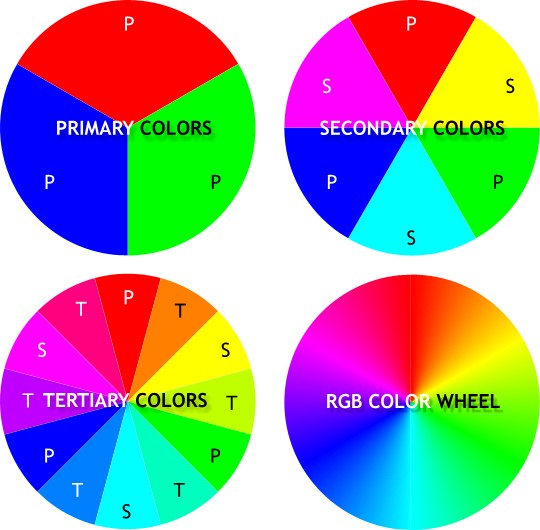
3. and 4. RGB Color Wheel and RGB List of Palettes: Some references for a neural network model that I am working on, about human color vision for my computational neuroscience class. It's a very very abstract model for color vision, and because I'm a bit more familiar with computer RGB color than with human color vision - though one can be generalized to the other, because of the theory of trichromatic color vision, which has the retina's three types of cones being preferentially sensitive to blue, green, and red wavelengths (i.e. long, medium, and short).

5. Larchmont Grill: Excellent restaurant near Hollywood (not actually in Larchmont Village though). I highly recommend it - great food, cool ambience (it's a converted craftsman-style house). I've been meaning to go there for the Sunday brunch, which sounds amazing. They also have a great room upstairs which can be rented out for private events (which is what I've been there for, now 3 times).

Wednesday, March 19, 2008

Sir Arthur C. Clarke

Earlier this week, Sir Arthur C. Clarke passed away at the age of 90. Several months ago, in December, for his 90th birthday, he recorded a sort of message to the world.

His words will do him far greater justice that I could, so here is the transcript of the speech, followed by the Youtube clip of it.

Hello! This is Arthur Clarke, speaking to you from my home in Colombo, Sri Lanka.

As I approach my 90th birthday, my friends are asking how it feels like, to have completed 90 orbits around the Sun.

Well, I actually don't feel a day older than 89!

Of course, some things remind me that I have indeed qualified as a senior citizen. As Bob Hope once said: "You know you're getting old, when the candles cost more than the cake!"

I’m now perfectly happy to step aside and watch how things evolve. But there's also a sad side to living so long: most of my contemporaries and old friends have already departed. However, they have left behind many fond memories, for me to recall.

I now spend a good part of my day dreaming of times past, present and future. As I try to survive on 15 hours’ sleep a day, I have plenty of time to enjoy vivid dreams. Being completely wheel-chaired doesn't stop my mind from roaming the universe – on the contrary!

In my time I’ve been very fortunate to see many of my dreams come true! Growing up in the 1920s and 1930s, I never expected to see so much happen in the span of a few decades. We 'space cadets' of the British Interplanetary Society spent all our spare time discussing space travel – but we didn’t imagine that it lay in our own near future…

I still can't quite believe that we've just marked the 50th anniversary of the Space Age! We’ve accomplished a great deal in that time, but the 'Golden Age of Space' is only just beginning. After half a century of government-sponsored efforts, we are now witnessing the emergence of commercial space flight.

Over the next 50 years, thousands of people will travel to Earth orbit – and then, to the Moon and beyond. Space travel – and space tourism – will one day become almost as commonplace as flying to exotic destinations on our own planet.

Things are also changing rapidly in many other areas of science and technology. To give just one example, the world's mobile phone coverage recently passed 50 per cent -- or 3.3 billion subscriptions. This was achieved in just a little over a quarter century since the first cellular network was set up. The mobile phone has revolutionized human communications, and is turning humanity into an endlessly chattering global family!

What does this mean for us as a species?

Communication technologies are necessary, but not sufficient, for us humans to get along with each other. This is why we still have many disputes and conflicts in the world. Technology tools help us to gather and disseminate information, but we also need qualities like tolerance and compassion to achieve greater understanding between peoples and nations.

I have great faith in optimism as a guiding principle, if only because it offers us the opportunity of creating a self-fulfilling prophecy. So I hope we've learnt something from the most barbaric century in history – the 20th. I would like to see us overcome our tribal divisions and begin to think and act as if we were one family. That would be real globalisation…

As I complete 90 orbits, I have no regrets and no more personal ambitions. But if I may be allowed just three wishes, they would be these.

Firstly, I would like to see some evidence of extra-terrestrial life. I have always believed that we are not alone in the universe. But we are still waiting for ETs to call us – or give us some kind of a sign. We have no way of guessing when this might happen – I hope sooner rather than later!

Secondly, I would like to see us kick our current addiction to oil, and adopt clean energy sources. For over a decade, I've been monitoring various new energy experiments, but they have yet to produce commercial scale results. Climate change has now added a new sense of urgency. Our civilisation depends on energy, but we can't allow oil and coal to slowly bake our planet…

The third wish is one closer to home. I’ve been living in Sri Lanka for 50 years – and half that time, I’ve been a sad witness to the bitter conflict that divides my adopted country.

I dearly wish to see lasting peace established in Sri Lanka as soon as possible. But I’m aware that peace cannot just be wished -- it requires a great deal of hard work, courage and persistence.

* * * * *

I’m sometimes asked how I would like to be remembered. I’ve had a diverse career as a writer, underwater explorer, space promoter and science populariser. Of all these, I want to be remembered most as a writer – one who entertained readers, and, hopefully, stretched their imagination as well.

I find that another English writer -- who, coincidentally, also spent most of his life in the East -- has expressed it very well. So let me end with these words of Rudyard Kipling:
If I have given you delight
by aught that I have done.
Let me lie quiet in that night
which shall be yours anon;

And for the little, little span
the dead are borne in mind,
seek not to question other than,
the books I leave behind.

This is Arthur Clarke, saying Thank You and Goodbye from Colombo!


Monday, March 17, 2008

Attention

A fun video about selective attention, and how people tend to focus on specific features or aspects of a scene. See if you pass the test...


Friday, March 14, 2008

Happy Pi Day!


For those who didn't realize, today, 3-14 (March 14) is Pi Day.

Some people celebrated with various protests. Though I'm not sure why.
Others that I know had cuptakes at 1:59pm today. (Get it? 3.14159) That's Pi Minute. Pi Second, of course, would be at 1:59:26.

More fun Pi facts:
  • The Guinness-recognized record for remembered digits of π is 67,890 digits, held by Lu Chao, a 24-year-old graduate student from China. It took him 24 hours and 4 minutes to recite to the 67,890th decimal place of π without an error.
  • There are many ways to memorize π, including the use of "piems", which are poems that represent π in a way such that the length of each word (in letters) represents a digit. Here is an example of a piem: How I need a drink, alcoholic in nature, after the heavy lectures involving quantum mechanics. (3 . 1 4 1 5 9 2 6 5 3 5 8 9 7 9)
  • The Feynman Point is the sequence of six 9s which begins at the 762nd decimal place of π. It is named after physicist Richard Feynman. For a randomly chosen irrational number, the probability of six 9s occurring this early in the decimal representation is only 0.08%. The next sequence of six consecutive digits is again composed of 9s, starting at position 193,034. Here are the first few hundred digits of Pi, with repeat digits highlighted in yellow (double), green (triple), and red (Feynman).
  • March 14 also happens to be Albert Einstein's birthday.
  • The first Pi Day celebration was held at the San Francisco Exploratorium in 1988, with staff and public marching around one of its circular spaces, and then consuming fruit pies; the museum has since added pizza pies to its Pi Day menu.
  • Today’s date expressed in DDMMYYYY format (14032008) occurs 9,209,525 digits after the decimal point in the value of pi. (hat tip to the good folks at The Xyre)
  • The coordinate (Pi, Pi) in latitude and longitude is in the sea just off the west coast of Africa. See a map on Google Maps.
Check out all the other things in history that happened on Pi Day.

Tuesday, March 11, 2008

Roundup of Science News

Sorry for the relative dearth of new posts in the last month. But I fully intend on being back on track, and we'll start with a roundup of recent science news.

College Men, Pay Attention:
In an article in a recent issue of Behavioral Ecology, researchers in Denmark reported that thanatosis (playing dead) is an adaptive mating behavior in pisaura mirabilis spiders. The spiders that played 'possum achieved copulation with females more than twice as often as those who did not. Also, they shared the romantic moment with the female spiders longer than the other spiders, and were able to fertilize more eggs during that time.

Gross Tales from Grad School:
The water you drink leaves a record in your hair because of differing oxygen and hydrogen isotopes it contains, and this can predict with 85% accuracy where you live. The technique is already in use by police in Salt Lake City, Utah to identify a murder victim. How did they conduct the research? They collected tap water samples and hair clippings from barbershop floors in 18 states. And I thought getting children who are dyslexic for our experiments was frustrating. Imagine traveling to 18 states to sweep up barbershop floors.

Other Blogs:
Finally, check out this post at Greg Laden's blog at scienceblogs.com - echoes my thoughts, more or less exactly. Spot on.

Friday, January 4, 2008

Iowa Caucus


So I've never really been *that* into politics, but I've started listening to NPR recently (oh, about 8 weeks ago?) and they've been talking a lot about the 2008 Presidential Election, and so I've gotten a new, fresh outlook on politics. Please note that these thoughts are my own, and are not an endorsement for any candidate. The quotations are taken directly from the candidate's own websites, linked below.

Some thoughts on Senator Barack Obama, the clear winner of tonight's Iowa Caucus for the Democratic Party, particularly as they are relevant to my current life and lifestyle, or are generally important to me...

  • The American Opportunity Tax Credit: "This universal and fully refundable credit will ensure that the first $4,000 of a college education is completely free for most Americans, and will cover two-thirds the cost of tuition at the average public college or university and make community college tuition completely free for most students. Obama will also ensure that the tax credit is available to families at the time of enrollment by using prior year's tax data to deliver the credit when tuition is due."
    • I like this, a lot. I believe that access to higher education should be made easier, and making community college tuition basically free will do it. Also, $4000 could go a long way for many families who send their children to local public universities (certainly not a huge dent in the tuition of private institutions, but still, its $4000 less that parents will have to pay).
  • More Streamlined Financial Aid Process: "Obama will streamline the financial aid process by eliminating the current federal financial aid application and enabling families to apply simply by checking a box on their tax form, authorizing their tax information to be used, and eliminating the need for a separate application."
    • Less paperwork. 'Nuff said.
  • Early Childhood and K-12 Education: I like the "zero-to-five" plan. Read more about it on his website. It has become clear to me, in my study of child development, as well as through my time as a hebrew school teacher and camp counselor that there is only so much that kids can be affected once they grow up a little bit. The more positive, enriching, and engaging the early years are, they better the later years will be. I like his plans for reforming the No Child Left Behind legislation, including improving assessments and shifting the focus from "teaching to the test" to a more full education. He also has quality ideas regarding improved teacher education, which we badly need. He is also big on technology literacy, and importantly for me, science literacy.

  • Science Research: "Barack Obama supports doubling federal funding for basic research, changing the posture of our federal government from being one of the most anti-science administrations in American history to one that embraces science and technology."
    • Emphasis added. 'Nuff said.
  • Climate Change: "Obama supports implementation of a market-based cap-and-trade system to reduce carbon emissions by the amount scientists say is necessary: 80 percent below 1990 levels by 2050." He will also "develop domestic incentives that reward forest owners, farmers, and ranchers when they plant trees, restore grasslands, or undertake farming practices that capture carbon dioxide from the atmosphere."
    • It looks like somebody was listening to Al Gore, and more importantly, the scientists. Time for someone in a real position of power and authority to do something about it. The energy-saving lightbulbs that I use can only do so much to curb carbon emissions. He also supports next-generation biofuels, and hopes to make us oil-independent by doubling fuel economy standards...and reducing consumption by 35% by 2030.
  • Israeli-Palestinian Conflict: The remaining issue of importance for me, and he doesn't really say much about this: "Obama will make progress on the Israeli-Palestinian conflict a key diplomatic priority. He will make a sustained push – working with Israelis and Palestinians – to achieve the goal of two states, a Jewish state in Israel and a Palestinian state, living side by side in peace and security."
    • He doesn't say anything about the status of Jerusalem, nor about the settlements or the right-of-return, or Israel's right to defend itself, or anything. We ALL want peace in the end, and many people are willing (or eager, in some cases) to create a two-state solution. So, what next?