Showing posts with label random musings. Show all posts
Showing posts with label random musings. Show all posts
Sunday, June 8, 2008
Friendships
The thing about friendships is that they take work. You don't just wake up one morning, and be like "I think I'll be friends with X." You have to take some time to figure out what are the things that X loves and hates. When you do something to annoy X, X needs to tell you explicitly what it was, what you could have done differently, etc - playing an elaborate game of trial and error is a waste of everyone's time and energy. If X is not willing to put a little effort into building a meaningful friendship, then despite what he or she says, he or she probably isn't truly interested in the friendship in the first place.

Friday, April 25, 2008
Firefox Tab Dump
Despite the somewhat dirty sounding title, here is a roundup of tabs that have been open on my Firefox browser the last week or so:
1. Gmail Blog: Gmail changed my life. Seriously. For those of you who have gmail but have not yet harnessed or experienced the entirety of the G-magic, read about the newest features here. I check this blog regularly, as well as its parent blog, the Googleblog.
2. Abraham Joshua Heschel: Short biography of this great Jewish thinker/philosopher/scholar/teacher at the USCJ website. I am eagerly awaiting the delivery of my latest venture into his philosophy, Who Is Man? I'm going to work through it with the outgoing Dean of Religious Life at USC starting after commencement. Works like this offer an interesting counterpoint to the more neuroscientific answers to the question of Who is Man that I spend time reading. What I wouldn't give to witness Rabbi Heschel in dialogue with Antonio Damasio, with whom I am about to start working, on a project looking at the neural basis for empathy.
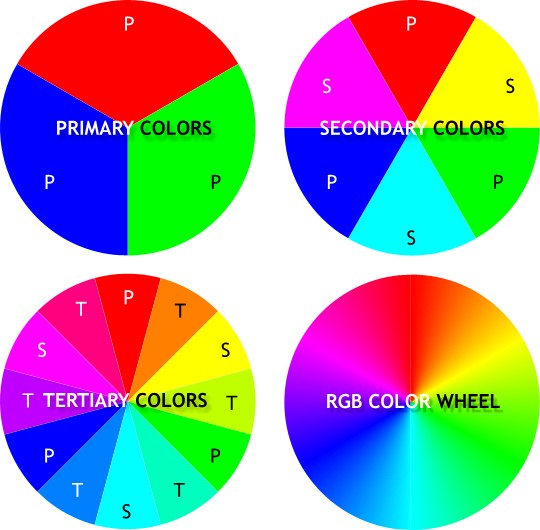
3. and 4. RGB Color Wheel and RGB List of Palettes: Some references for a neural network model that I am working on, about human color vision for my computational neuroscience class. It's a very very abstract model for color vision, and because I'm a bit more familiar with computer RGB color than with human color vision - though one can be generalized to the other, because of the theory of trichromatic color vision, which has the retina's three types of cones being preferentially sensitive to blue, green, and red wavelengths (i.e. long, medium, and short).
5. Larchmont Grill: Excellent restaurant near Hollywood (not actually in Larchmont Village though). I highly recommend it - great food, cool ambience (it's a converted craftsman-style house). I've been meaning to go there for the Sunday brunch, which sounds amazing. They also have a great room upstairs which can be rented out for private events (which is what I've been there for, now 3 times).
1. Gmail Blog: Gmail changed my life. Seriously. For those of you who have gmail but have not yet harnessed or experienced the entirety of the G-magic, read about the newest features here. I check this blog regularly, as well as its parent blog, the Googleblog.
2. Abraham Joshua Heschel: Short biography of this great Jewish thinker/philosopher/scholar/teacher at the USCJ website. I am eagerly awaiting the delivery of my latest venture into his philosophy, Who Is Man? I'm going to work through it with the outgoing Dean of Religious Life at USC starting after commencement. Works like this offer an interesting counterpoint to the more neuroscientific answers to the question of Who is Man that I spend time reading. What I wouldn't give to witness Rabbi Heschel in dialogue with Antonio Damasio, with whom I am about to start working, on a project looking at the neural basis for empathy.
3. and 4. RGB Color Wheel and RGB List of Palettes: Some references for a neural network model that I am working on, about human color vision for my computational neuroscience class. It's a very very abstract model for color vision, and because I'm a bit more familiar with computer RGB color than with human color vision - though one can be generalized to the other, because of the theory of trichromatic color vision, which has the retina's three types of cones being preferentially sensitive to blue, green, and red wavelengths (i.e. long, medium, and short).
5. Larchmont Grill: Excellent restaurant near Hollywood (not actually in Larchmont Village though). I highly recommend it - great food, cool ambience (it's a converted craftsman-style house). I've been meaning to go there for the Sunday brunch, which sounds amazing. They also have a great room upstairs which can be rented out for private events (which is what I've been there for, now 3 times).
Friday, March 14, 2008
Happy Pi Day!

For those who didn't realize, today, 3-14 (March 14) is Pi Day.
Some people celebrated with various protests. Though I'm not sure why.
Others that I know had cuptakes at 1:59pm today. (Get it? 3.14159) That's Pi Minute. Pi Second, of course, would be at 1:59:26.
More fun Pi facts:
- The Guinness-recognized record for remembered digits of π is 67,890 digits, held by Lu Chao, a 24-year-old graduate student from China. It took him 24 hours and 4 minutes to recite to the 67,890th decimal place of π without an error.
- There are many ways to memorize π, including the use of "piems", which are poems that represent π in a way such that the length of each word (in letters) represents a digit. Here is an example of a piem: How I need a drink, alcoholic in nature, after the heavy lectures involving quantum mechanics. (3 . 1 4 1 5 9 2 6 5 3 5 8 9 7 9)
- The Feynman Point is the sequence of six 9s which begins at the 762nd decimal place of π. It is named after physicist Richard Feynman. For a randomly chosen irrational number, the probability of six 9s occurring this early in the decimal representation is only 0.08%. The next sequence of six consecutive digits is again composed of 9s, starting at position 193,034. Here are the first few hundred digits of Pi, with repeat digits highlighted in yellow (double), green (triple), and red (Feynman).
- March 14 also happens to be Albert Einstein's birthday.
- The first Pi Day celebration was held at the San Francisco Exploratorium in 1988, with staff and public marching around one of its circular spaces, and then consuming fruit pies; the museum has since added pizza pies to its Pi Day menu.
- Today’s date expressed in DDMMYYYY format (14032008) occurs 9,209,525 digits after the decimal point in the value of pi. (hat tip to the good folks at The Xyre)
- The coordinate (Pi, Pi) in latitude and longitude is in the sea just off the west coast of Africa. See a map on Google Maps.

Wednesday, March 12, 2008
Monday, December 31, 2007
2008...the year of the what?
As 2007 comes to a close and 2008 looms on the (very near) horizon, it may be appropriate to reflect on what the year 2008 is supposed to stand for.
It is not very easy to convince the United Nations to declare a year for something, so it is interesting that this year the UN has announced 4 years-of:
1. The Year of the Potato. This was recommended by Peru's government - not because the potato is in any danger, but to highlight the importance of the potato and its possibility for alleviating world poverty. They claim that the potato "produces more nutritious food more quickly, on less land, and in harsher climates than any other major crop."
2. The International Year of Sanitation. This was designated to raise awareness of the plight of roughly 41% of the world's population — at least 2.6 billion people — who don't have access to basic sanitation. This is in line with one of the UN's Millennium Development Goals to reduce this number by half by 2015.
3. The International Year of Languages. Since my research involved reading and language (particularly, reading multiple languages with different alphabets), I am overjoyed to hear this news. An excerpt from the Sixty-First General Assembly Plenary:
4. The International Year of the Planet Earth. Which lasts for three years. Funding for this program started in 2007 and will end in 2009. The aim of this program is to bring more attention to Earth scientists and their research, referencing the 2004 Asian Tsunami as an example of an event which could have involved fewer deaths if more attention was paid to the Earth Sciences.
Outside of the UN, it appears fairly easy to designate various years-of...
 1. The Year of the Frog. The Amphibian Ark has highlighted 500 frog species threatened with extinction. Kermit the Frog is the official spokesperson for the program.
2. The (Second) International Year of the Reef, according to the International Coral Reef Initiative. The IYOR aims to educate people about the importance of coral reefs to world ecosystems.
3. The Year of Feta Cheese - in Greece.

4. The Year of Boy Scouts and Engineering - in Australia.
5. The Year of Gardens - in Cheshire, England.
6. The Year of Intercultural Dialogue for the European Union (shouldn't that be EVERY year, in the EU?)
Oh, and 2008 is also the Chinese Year of the Rat.
...with thanks to Nature News for some of the references above.
It is not very easy to convince the United Nations to declare a year for something, so it is interesting that this year the UN has announced 4 years-of:
1. The Year of the Potato. This was recommended by Peru's government - not because the potato is in any danger, but to highlight the importance of the potato and its possibility for
 alleviating world poverty. They claim that the potato "produces more nutritious food more quickly, on less land, and in harsher climates than any other major crop."
2. The International Year of Sanitation. This was designated to raise awareness of the plight of roughly 41% of the world's population — at least 2.6 billion people — who don't have access to basic sanitation. This is in line with one of the UN's Millennium Development Goals to reduce this number by half by 2015.
3. The International Year of Languages. Since my research involved reading and language (particularly, reading multiple languages with different alphabets), I am overjoyed to hear this news. An excerpt from the Sixty-First General Assembly Plenary:
...recognizing that genuine multilingualism promotes unity in diversity and international understanding, proclaimed 2008 the International Year of Languages.
Acting without a vote, the Assembly, also recognizing that the United Nations pursues multilingualism as a means of promoting, protecting and preserving diversity of languages and cultures globally, emphasized the paramount importance of the equality of the Organization’s six official languages (Arabic, Chinese, English, French, Russian and Spanish)...
4. The International Year of the Planet Earth. Which lasts for three years. Funding for this program started in 2007 and will end in 2009. The aim of this program is to bring more attention to Earth scientists and their research, referencing the 2004 Asian Tsunami as an example of an event which could have involved fewer deaths if more attention was paid to the Earth Sciences.
Outside of the UN, it appears fairly easy to designate various years-of...
 1. The Year of the Frog. The Amphibian Ark has highlighted 500 frog species threatened with extinction. Kermit the Frog is the official spokesperson for the program.
2. The (Second) International Year of the Reef, according to the International Coral Reef Initiative. The IYOR aims to educate people about the importance of coral reefs to world ecosystems.
3. The Year of Feta Cheese - in Greece.

4. The Year of Boy Scouts and Engineering - in Australia.
5. The Year of Gardens - in Cheshire, England.
6. The Year of Intercultural Dialogue for the European Union (shouldn't that be EVERY year, in the EU?)
Oh, and 2008 is also the Chinese Year of the Rat.
...with thanks to Nature News for some of the references above.
Sunday, December 16, 2007
More whales

Another random thought, only peripherally related to the whales...which I read about in Cosmos, by Carl Sagan, last night.
Whales are known to have a variety of songs that they use to communicate with eachother. They tend to use the 20 Hz frequency to do so (if I remember correctly, but the details aren't important), and that is a frequency which passes so easily through sea water that a whale in the waters off of Antarctica could relatively easily have a conversation with a whale in the Aleutian Islands, off of Alaska. In a sense, this was the first global communications network. Now, we humans in our industrial way of doing things, have introduced so much noise into the oceans that whales probably can't communicate with other whales more than a few hundred kilometers away. If we have any desire to have any sort of communication with intelligent life on other planets, shouldn't we try to communicate first with the intelligent life on OUR OWN PLANET? Whales are smart enough to have utilized a sort of global communications network, and we've effectively destroyed it. Whales are smart enough to use incredible teamwork to capture their dinner. If that's not a sign of intelligence (on the part of the whales), then I'm not sure what we're expecting to find in the sky. If there is indeed extraterrestrial intelligence, and they indeed tried to communicate with us, would we even recognize it?
I'm sure its no accident that on the golden record included on the Voyager spacecraft, included are several songs of the humpback whales.
Saturday, December 15, 2007
Science Education
Why is it that otherwise well-educated people are embarrassed to mention that they've never read Shakespeare's Romeo and Juliet, or that they don't know who Chaucer is, but when it comes to science, instead of being embarrassed that they don't understand evolution, or genetics, or basic anatomy, or basic cell biology, or how carbon emissions affect the environment, or (i could go on for a while here)...the response is "well, i never was very good in my science classes" ?
These are important things for educated, informed people (voters!) to understand. How can they vote in elections without understanding the very basics of stem cell research, cloning, climate change, creation/evolution/intelligent design, and so on?
These are important things for educated, informed people (voters!) to understand. How can they vote in elections without understanding the very basics of stem cell research, cloning, climate change, creation/evolution/intelligent design, and so on?
Thursday, December 13, 2007
Two Research Papers, and things i've been thinking about lately

Here is a short excerpt from an article I read that covered a paper that was published in the journal Nature:
Japan Scientists Develop Fearless Mice
By KAORI HITOMI
Associated Press Writer
TOKYO (AP) -- Cat and mouse may never be the same. Japanese scientists say they've used genetic engineering to create mice that show no fear of felines, a development that may shed new light on mammal behavior and the nature of fear itself.And here's an interesting video showing orca teamwork...the critical moment happens about 2:40 into the video, but the entire video is interesting. It appears as if the orcas are working in a team to push the ice floe (with helpless seal trapped aboard) into the water, and then they create a wave to wash their next meal into the water, where they will presumably chomp him (or her) to bits. More interesting is that (according to the researcher, who is filming) they seem to be teaching a younger orca about the hunting strategy...since its hard to tell from the video, I will take his word for it. (Thanks to Mo at Neurophilosophy for the reference to this).
Scientists at Tokyo University say they were able to successfully switch off a mouse's instinct to cower at the smell or presence of cats - showing that fear is genetically hardwired and not learned through experience, as commonly believed.
The reference for the whale article:
Visser, I. N. et al. Mar. Mamm. Sci. doi: 10.1111/j.1748-7692.2007.00163.x (2007).
Some random, various thoughts that I have:
I'm a little troubled by the seemingly simple explanation that "fear is genetically hardwired and not learned through experience." Strictly speaking, I'd be willing to believe that the fear-of-cats response (in the mice) is brought about by the mouse genome, because of natural selection. Those mice with "the fear-of-cats gene" (remember that genes are not "for" something, but it makes it easier to speak as if they are) survived longer than those without the fear-of-cats gene, and they reproduced more successfully, and therefore the fear became "genetically hardwired." But then you have to think about gene expression, and you have to think about gene-environment interaction, and you have to think about the cats and their gene expression.
If mice were only found in the North American midwest, and cats were only native to Northeastern Africa, it is unlikely that mice would ever have developed a fear-of-cats gene, and it is equally unlikely that cats would have ever developed a mice-taste-good gene. In this way, it is only because of a sort of meta-experience that mice ever became afraid of cats, and similarly that cats favored the taste of mice. There was a very good reason that it was more adaptive for mice to fear cats, and similarly a good reason that cats came to enjoy mice. It was adaptive! I recommend the book The Selfish Gene, by Richard Dawkins for anyone interested in thinking about these sorts of things. (also, how convenient that the cats that the genetically altered mice were exposed to were docile house-trained cats, who did not need to eat mice to survive...)
Now this brings me to the question of the seals and the whales. Is anybody going to tell me, given this news about the mice, that the seal has not learned from experience (in the immediate, or meta- sense) that he is about to become dinner for those whales? Has not the seal watched countless friends and relatives suffer the same fate as he is about to suffer? And what about the whales? Even if it has become genetically "hardwired" to have a seals-taste-good gene, the young need to be TRAINED in how to get the seal in the first place. Not like visual edge detection in humans, which does not need to be learned. It is a learned behavior, like reading. There is variability in reading because it is learned. Some people are good at reading, some are less skilled. Some orcas are good at hunting, some are less skilled. In time, the good hunters' genes will be passed on, and the lesser hunters genes' will die out. Will some scientist in the future say that orcas are genetically hard-wired to make waves to push the seals off of the ice floe, because of the way that the environment interacts with the genes, today?
Maybe I'm just confusing myself...and whoever happens to read my ramblings.
Tuesday, December 4, 2007
Saturday, November 24, 2007
Harrison Ford
Every Harrison Ford movie (of recent years, not including earlier stuff like Star Wars, or Indiana Jones) is the same:
1. Opening scene(s) in which it is made clear that Harrison Ford loves his family, his wife, his family dog.
2. Mean man, who knows everything about Harrison Ford's family (like the name of his dog, or his son's allergies), kidnaps the family and tells Harrison Ford about it, but doesn't tell him what he wants.
3. Finally, mean man tells Harrison Ford what he wants.
4. Harrison Ford says no. Mean man makes it clear that he isn't playing games.
5. Harrison Ford says okay, goes through the motions.
6. Meanwhile, Harrison Ford is creating an elaborate plan to turn the tables on the mean man and his cronies.
7. Harrison Ford's elaborate plan goes wrong. Family put into more danger.
8. Harrison Ford comes up with new plan. Saves family. Saves family dog. Kills mean man. Roll the credits.
So why are they all so good?
1. Opening scene(s) in which it is made clear that Harrison Ford loves his family, his wife, his family dog.
2. Mean man, who knows everything about Harrison Ford's family (like the name of his dog, or his son's allergies), kidnaps the family and tells Harrison Ford about it, but doesn't tell him what he wants.
3. Finally, mean man tells Harrison Ford what he wants.
4. Harrison Ford says no. Mean man makes it clear that he isn't playing games.
5. Harrison Ford says okay, goes through the motions.
6. Meanwhile, Harrison Ford is creating an elaborate plan to turn the tables on the mean man and his cronies.
7. Harrison Ford's elaborate plan goes wrong. Family put into more danger.
8. Harrison Ford comes up with new plan. Saves family. Saves family dog. Kills mean man. Roll the credits.
So why are they all so good?
Thursday, November 22, 2007
Japanese Game Shows
Japanese game shows are possibly the most ridiculous, ever.
Other than that, I'm mentally and physically and emotionally exhausted. Why is it that once you finally seem to be settled into some sort of rhythm in life, like ten thousand different things all happen at once to disrupt that delicately balanced homeostasis that you've worked so hard to achieve? At least I've got my research. I wonder if that's why people in academia and/or research tend to sequester themselves in the lab for hours on end...as a way to not have to deal with the outside world. When you're doing experimental research, you control, or attempt to control, everything except for one variable. And even then, you categorize the variable of interest, thereby controlling the way that you interpret it. You leave as little as possible to chance. I wonder if that says something about scientists and researchers. For people who would like to live a life in that sort of a model, it seems like a very predictable, and very boring, way to live.
Other than that, I'm mentally and physically and emotionally exhausted. Why is it that once you finally seem to be settled into some sort of rhythm in life, like ten thousand different things all happen at once to disrupt that delicately balanced homeostasis that you've worked so hard to achieve? At least I've got my research. I wonder if that's why people in academia and/or research tend to sequester themselves in the lab for hours on end...as a way to not have to deal with the outside world. When you're doing experimental research, you control, or attempt to control, everything except for one variable. And even then, you categorize the variable of interest, thereby controlling the way that you interpret it. You leave as little as possible to chance. I wonder if that says something about scientists and researchers. For people who would like to live a life in that sort of a model, it seems like a very predictable, and very boring, way to live.
Tuesday, November 20, 2007
This is a test

This is a test. Using different fonts. and styles and colors
and alignments.
I should probably include a link as well.
And a picture.
Is it required that every blog have a "hello world" type first entry? Like, is it stated somewhere in the unwritten rules of blogging? Actually, its probably written down somewhere. Someone probably blogged about it. And someone else read it and blogged about it too. I resisted my semi-serious foray into the blogosphere as long as possible (much like I resisted facebook, for a while).
But, as J.D. Klein has said to me, "you have things to say."
...We'll see.
And a picture.
Is it required that every blog have a "hello world" type first entry? Like, is it stated somewhere in the unwritten rules of blogging? Actually, its probably written down somewhere. Someone probably blogged about it. And someone else read it and blogged about it too. I resisted my semi-serious foray into the blogosphere as long as possible (much like I resisted facebook, for a while).
But, as J.D. Klein has said to me, "you have things to say."
...We'll see.
Subscribe to:
Posts (Atom)